Tuesday, July 11, 2017

2 Months in Taipei, Taiwan


Hello everyone! My name is Erin Mulhearn and I was fortunate enough to receive a grant to learn Mandarin in Taiwan this summer. Its been five weeks since I arrived in Taipei and I am absolutely loving it so far. I am studying at a small language school in the Zhongzheng district called Taiwan Mandarin Institute (TMI). The classes are very small, mine only has three including myself, so I feel like I am learning at a more intimate level. 

Before coming to Taiwan I had a very limited knowledge of the language, I only knew how to introduce myself and a few various words about food. One month into the program, I feel that my Mandarin has improved immensely. Firstly, I knew that Mandarin was a tonal language but I didn't realize the extent to which the tones matter. For example the pinyin for buy is mǎi with the third tone, however the pinyin for sell is also mài with the forth tone. Because English is not a tonal language learning the differences between the tones has been very difficult. 

Secondly, here in Taiwan the people use traditional writing instead of simplified that is used in mainland China. I already knew the writing was difficult but traditional writing is even harder than the simplified writing that I have seen before. However, this was one of the reasons why I chose to study in Taiwan over China, most of the meaning of the word is lost in the transition from traditional to simplified. For example the character for love in traditional is  with the character for heart () inside. This is much different from the simplified as the character for heart is removed an written as . In the transition from traditional to simplified the heart was removed from love which I think removes a lot of the meaning as well.


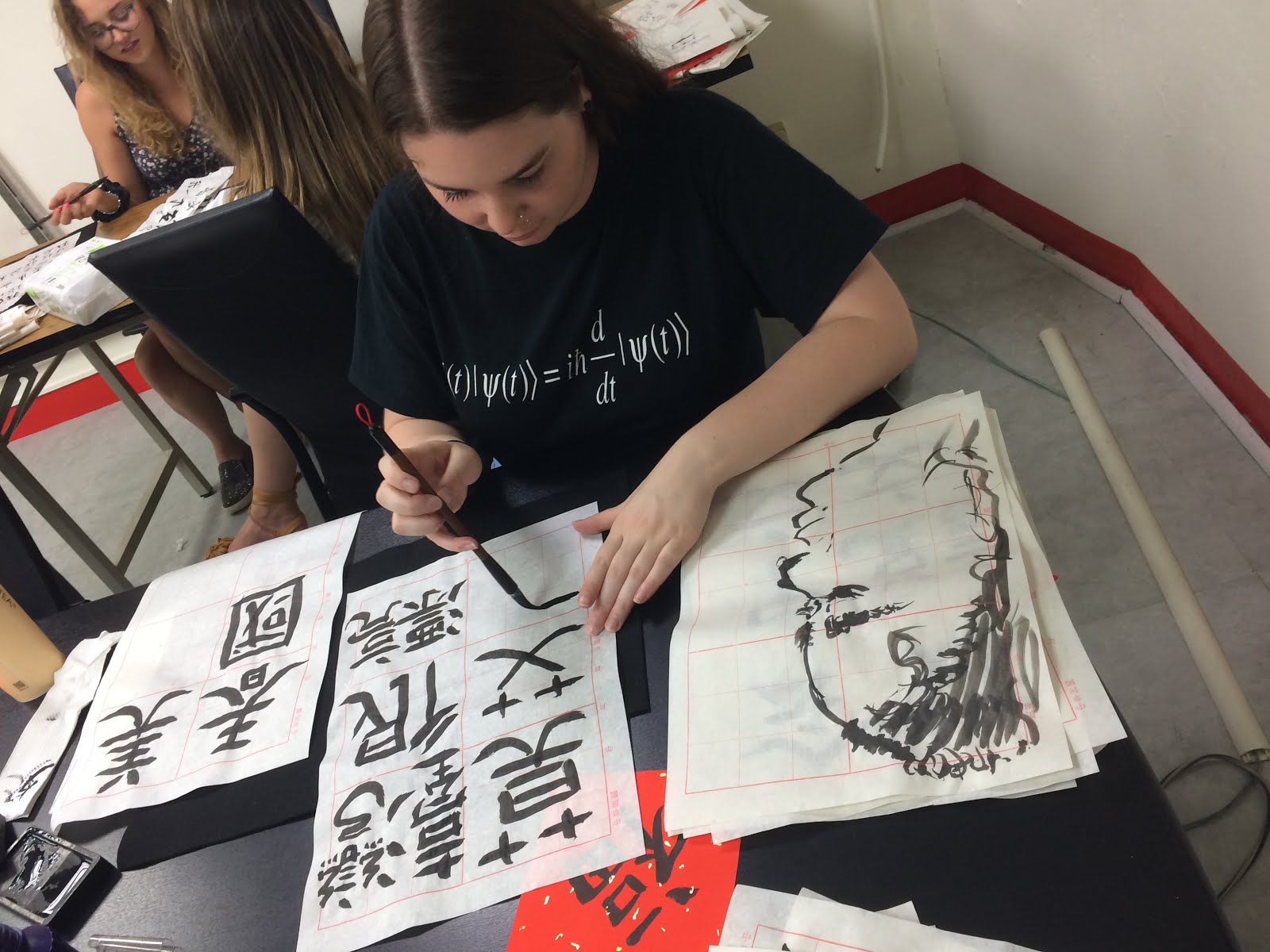
Practicing calligraphy (書法) at the school 


Being forced to actually speak the language to survive is making leaning the language even easier and its great practice. One of the things that I noticed right away is how nice the locals are here. Whenever I order food everyone asks where I am from, why I'm here in Taiwan, and if I mispronounce a tone they will correct it and have me repeat so I can learn. Taipei is a great city filled with history and culture but I've only experienced a fraction of what it has to offer so far. 

Chiang Kai Shek Memorial (中正紀念堂)
The view of Taipei 101 from Elephant Mountain (像山)
(慈祐宮) Ciyou Temple outside Raohe Night Market


Monday, July 10, 2017

Update from Nagoya, Japan! - VLOG


Learning Mandarin Chinese in Tainan, Taiwan

There is no better way to learn a language than through total immersion; sitting in an American classroom for a few hours every week only gets you so far. Therefore, given that I hope to develop professional fluency in Mandarin Chinese, I am quite thankful to have received the Sigur Center Grant for Chinese Language Study in Taiwan.

At present, I am studying Chinese at National Cheng Kung University in Tainan, Taiwan through the American Councils Taiwan Intensive Summer Language Program. Though I have only been in Taiwan for just over two weeks, my Chinese has already improved markedly!

A farm in Taijiang National Park (the outskirts of Tainan).

The best part of my program is the individualized tutoring. Not only do we meet with a professor for a one-on-one session every morning Monday through Friday, each student also has a language partner. Our language partners are local students who have agreed show us around the city and help us practice our Chinese. This individualized tutoring allows me to tailor my language study experience to my specific areas of interest -- policy issues related to China, especially US-China threat perception in the South China Sea. 

Additionally, I am thoroughly enjoying the cultural aspect of my language study experience. I lived in China for three years while growing up, and so culture shock has not been much of an issue here in Taiwan. Rather, the cultural immersion is a welcome return. In particular, it has been quite interesting to discover how cultural differences between the mainland and Taiwan lead to slight variations in their respective versions of Mandarin Chinese.

A temple in Tainan.

Because Taiwan is relatively small, travelling around the island is fairly fast, cheap, and easy. I've already visited Kaohsiung, and I have plans to visit Taichung and Taipei. Moreover, because I took a class about Daoism last semester, I have seized every opportunity to go see local Taiwanese temples -- I have already visited five!

Flying a kite in Kaohsiung.

I look forward to what these next six weeks have in store.

Zachary Haver is a Sigur Center 2017 Asian Language Fellow. A rising sophomore studying at George Washington University's Elliott School of International Affairs, Zachary is majoring in International Affairs with a concentration in Asia and minoring in Mandarin Chinese.


Saturday, July 8, 2017

The Wall: Overcoming Your Insecurities on the Path to Fluency


The Wall

While the process of learning a second language may come easy for some, it can be a great challenge for others. As someone who has been learning Chinese for nearly five years, I can say it has not come easy for me. There have been moments in the process that have made me question my ability to learn, or my overall desire to continue studying the language. I have referred to my own doubts as “the wall.” And I have found that once you recognize what your wall is, you will be better prepared to overcome it.

Most often our frustrations and doubts are the result of comparison. It is likely that you know someone who fluently speaks two or three languages. Or perhaps, you know someone who mastered Chinese in only a couple years. And I am confident we have all seen books, or online training courses that boast fluency in just six months! When I first began learning Chinese I was determined to realize the same success. When six months, and then a couple years had passed and I had yet to achieve anything beyond an intermediate speaking and reading level, I grew increasingly discouraged. Why was I struggling so much when others seemed to be doing so well? Slowly my insecurities began to take over. I was afraid to practice speaking in front of others, afraid they would judge me for my limited vocabulary and poor grammar. This fear and my concern with what others thought of me and my abilities grew, and as it did it began to undercut my learning.

I wish I could tell you this is something that is easy to overcome, but it is not. If you have experienced this yourself, I am sure you understand. Self-consciousness can keep you from utilizing the resources around you meant to promote learning, or make you pass up unique academic or professional opportunities simply because you do not think you have what it takes. My self-doubt prevented me from speaking Chinese with my classmates and other international students. It kept me from registering for courses that utilized primary resources in Chinese. While I was studying abroad in Taiwan four years ago, it caused incredible nervousness when I was merely trying to order a meal. I was absolutely terrified of conversing with anyone in Chinese. My fear grew from a bump in the road to a daunting wall. Fortunately, I have just now made it to the other side of this wall.

When I decided to spend the summer in Taipei studying Chinese, I told myself this was for me. I was taking this opportunity to improve myself and nobody else. Personal improvement is just that, PERSONAL! You cannot and should not measure your success or growth by anyone else’s standards. Everyone learns differently and at a different pace. Whether it takes you months or years to learn a language, be proud of yourself. Always be confident in your dreams, even when you are not confident in yourself. The growth I have experienced in the past month is more than I have had in the year prior, proof that when you commit to yourself and your goals, you can overcome all of the irrational yet intimidating insecurities that have ever held you back.

So, go forth! Make mistakes, but choose to learn from them rather than be discouraged by them. We all stumble and sometimes it takes us a while to get back up, but I promise you will make it over the wall!

加油!

Katelyn DeNap

George Washington University - Elliott School of International Affairs
M.A. Security Policy Studies
Organization of Asian Studies – Vice President
Sigur Center 2017 Asian Language Fellow
National Taiwan University - International Chinese Language Program, Taiwan
Friday, June 30, 2017

Easing into India in Majnu ka Tilla


Noise, especially traffic noise, is a seemingly inescapable fact of city life. Vehicles are noisy everywhere, but noise pollution is a particular problem in South Asia’s urban centers. Delhi is no exception, and I always come prepared with an ample supply of my favorite earplugs. I am very grateful, then, to have found a truly peaceful neighborhood on the western bank of the Yamuna River to call home during the past several weeks of fieldwork in Delhi.

Majnu ka Tilla (or MT, as it is popularly known) is a designated settlement for Tibetan refugees. Quite contrary to the negative visions that might be conjured by the term “refugee colony,” India’s Tibetan population is well-settled and united under the Tibetan government-in-exile led by the Dalai Lama, whose portrait is prominently displayed in every establishment. MT gives the impression of strong community organization and economic prosperity. Its streets are swept clean daily. Residents and visitors alike crowd into restaurants and cafes throughout the day and, although owners and senior managers are almost invariably Tibetan, employees are drawn from all backgrounds and from across northern India and Nepal. Tibetan, Hindi, Nepali, and English languages are all heard in good measure. Delhi’s rather dour and aggressive public culture is nowhere in evidence, apparently left behind at the colony gates.

The colony draws a wide range of visitors. MT is an important stopover point for Tibetan monks traveling between Dharamsala, Kathmandu, and monasteries across India and the world. It is also located near the north campus of Delhi University and has long been a popular student haunt. A friend who studied at DU in the late 1970s and early 1980s tells me he used to visit to drink cheap chhaang (Tibetan rice beer). These days, there are still plenty of students, but the neighborhood has earned a reputation as a foodie destination and draws weekend crowds from across Delhi’s large middle class. My friend’s daughter, now a student at DU herself, is a regular in MT; I have reassured my friend that the chhaang dens of his youth are nowhere to be seen, replaced by air conditioned cafes and restaurants of a high standard that serve food from across Asia, including Tibet, Nepal, Korea, and India’s northeast.

Another standout characteristic of MT is its nearly traffic-free character. Its alleys are too narrow to permit cars, and while the occasional motorcycle makes its way through, the colony is essentially a pedestrian zone. This is rare anywhere in the world but, in a city of heavy, aggressive traffic, it makes MT a true gem. Residents who own cars park them outside the colony walls. Deliveries are offloaded outside the colony and brought in by cycle rickshaw.

I am grateful for the refuge that MT has provided during my work in Delhi: a friendly and peaceful place to write, read, decompress and, of course, eat, after a day out and about. But what about the chhaang? This is my third time staying in Majnu ka Tilla, and until a few days back I thought the colony had gone completely dry. Not so! No doubt the best chhaang is brewed at home and kept for personal consumption. The other night, though, I did find a very good cup of traditional Naga rice beer. At 120 rupees (around $2) a glass, it’s far from the cheap chhaang of my friend’s youth or that I would sometimes buy out of Castrol motor oil jugs along the East-West highway during previous work in Nepal. The quality is the best I’ve had: slightly sour, and a little thick.

I am off to Lucknow tomorrow for the next stage of my work. But, I am already looking forward to a few more nights in peaceful MT at the end of the summer. 


Sam Frantz is a doctoral student in political science, and a recipient of a 2017 Sigur Center Grant for Asian Field Research.


Tuesday, June 27, 2017

Greetings from Nagoya, Japan!


こんにちは~!

_________________________________________________

Hello! I'm Irene, a rising senior at the Elliott School pursuing a degree in International Affairs with a double-minor in Peace Studies and Japanese. Thanks to the Sigur Center's Summer Language Grant, I'm currently participating in an intensive Japanese language program at Nanzan University in Nagoya, Japan and am thoroughly enjoying every minute!

Although the classes go at a much faster pace than I'm used to, studying the language while actually in the country is much more enriching in my opinion because learning isn't confined to the classroom.  I've found that my conversational Japanese has improved immensely as I've caught myself thinking in Japanese rather than thinking in English and then struggling to verbalize a coherent translation.

Downtown Nagoya

Once of the reasons I chose to pursue a language program in Nagoya rather than Tokyo is because I wanted to place myself in a strictly Japanese-speaking environment. Tokyo, being the nation's capital city and most popular tourist destination, has plenty of bilingual Japanese citizens and English-speaking tourists. Alternatively, Nagoya is a mid-sized city with more opportunities to practice my language skills by virtue of fewer English-speakers. There's a lot to learn just from everyday interactions.

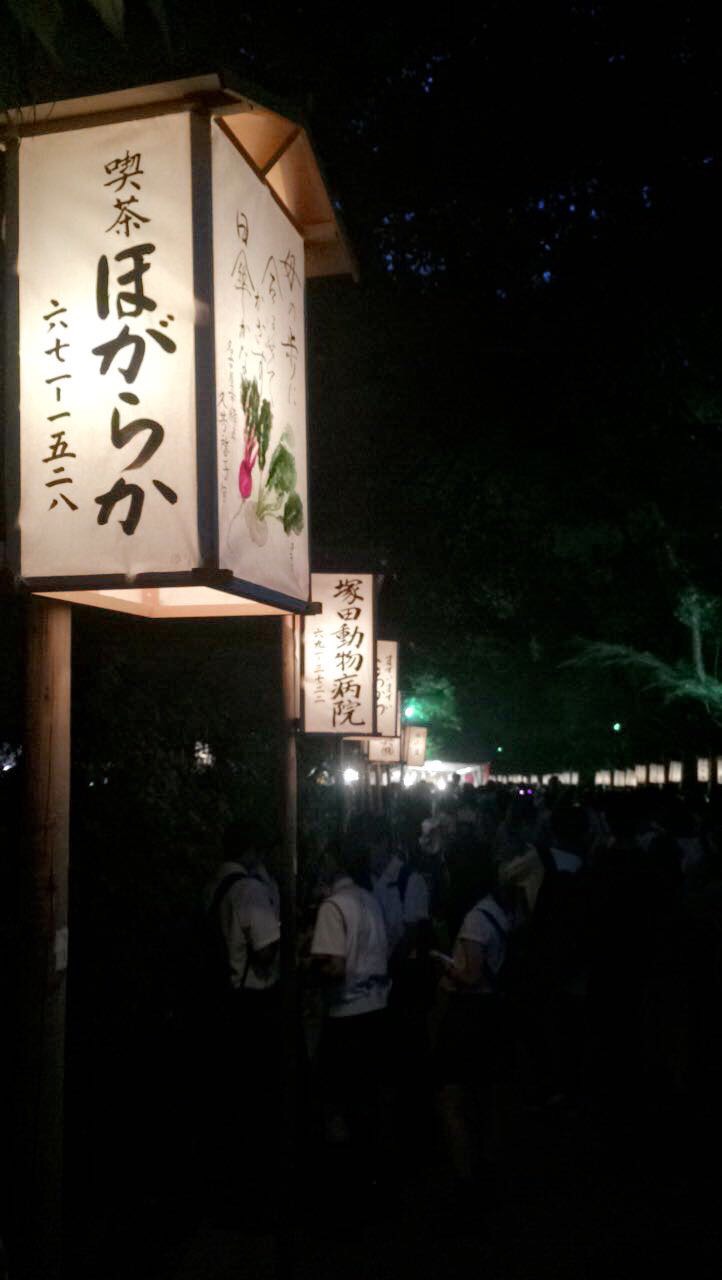
Although smaller than Tokyo, Nagoya has its own tourist attractions, too. One of its famous spots is "Osu", its shopping district. Among the various shops and brand name stores are also small shrines and places of worship. I found this mix of tradition and modernity particularly interesting and think it quite unique to Japan. Even more, a couple of weeks ago was Nagoya's own Atsuta Festival (熱田祭り). Each entrance to the Atsuta Jingu Shrine was marked by a giant float containing lanterns. Inside, the walkways were lined with street vendors making popular Japanese dishes to the tune of traditional Japanese music. Live performances varied from dancing and drumming to archery. The night ended on a bang with a spectacular fireworks display. 

In a couple weeks, I plan to go visit Kyoto, the historical capital of Japan. Can't wait to see what's in store and can't wait to share it with you guys!

Until then!


(Above) Osu Shopping District


(Above) Atsuta Festival


Irene Mutwiri
George Washington University - Elliott School of International Affairs
B.A. International Affairs
Sigur Center 2017 Asian Language Fellow
Nanzan University - Summer Japanese Program, Japan

Tuesday, June 20, 2017

ICLP's Approach to Learning Chinese

ICLP’s Approach to Learning Chinese:

Taipei’s National Taiwan University (NTU) is home to one of the most prestigious Mandarin language programs in the world. The International Chinese Language Program (ICLP) focuses on improving students’ scholarly speaking abilities. ICLP alumni praise the program for the dramatic results it produces. So, what is the secret to ICLP’s success?

The program prides itself on its unique approach to learning. ICLP bases its curriculum on “5 Principles” and “8 Actions.” Students that adopt the “5 Principles” and consistently utilize the “8 Actions” are guaranteed to drastically improve their Chinese speaking abilities in only a matter of eight weeks.

Let’s examine ICLP’s 5 Principles:

Focus on Content Relevant to You   At ICLP, the administrators and professors tailor the curriculum to their students’ needs. With many students hoping to use Chinese in their academic coursework and in their future professions, the program focuses on teaching Mandarin for scholarly use. They have found students are better able to retain information that is relevant to them. Ultimately, the program aims to prepare students to use Chinese in their everyday academic and professional lives after leaving the program.

Use the Language to Communicate   As students begin to learn the language, it is critical that students use what they learn to communicate. Students’ communications will reinforce what they learn in the classroom. To encourage this principle, ICLP is a language immersion program. Students must sign a pledge to speak only Chinese while at school and are encouraged to continue utilizing Chinese as they explore Taiwan. In such an environment, students learn from both their professors and their classmates.

Prioritize Understanding the Message   At ICLP, learning is believed to come through understanding. When learning Chinese, students are tempted to prioritize learning what characters look like before learning their meaning. Ultimately, the message is more important for communication. For this reason, the program is structured to emphasize listening comprehension and speaking.

Emphasize Physiological Training   To reinforce successful learning, it is critical that physiological training be a cornerstone of your language study. Because Chinese is a tonal language, students who pay attention to tones early on will have a more wholesome understanding of the language and find greater success in their communications.

Your Psycho-Physiological State Matters   The last, and what ICLP coordinators believe to be the most critical principle in the study of the Chinese language is approaching the learning process with passion and a positive mindset. We will all face our own difficulties throughout the course of our language study, but only those who embrace optimism and maintain their passion for Chinese language and culture will be able to persevere.

Now, let’s examine ICLP’s 8 Actions:

Listen A Lot   While beginners may not be able to communicate effectively, they can improve their communication skills more quickly through active listening. Listening can take place both in and outside of the classroom.  Also, because Chinese is a tonal language, it is critical that students listen to perfect their own speaking and pronunciation. ICLP creates a great environment for listening as students and teachers each agree to speak only Chinese on campus. While beginner students may be overwhelmed at first, they find themselves recognizing new words and phrases each day to use in their own communications.

Focus on Meaning before Words   Instead of simply memorizing what characters look like, ICLP encourages students to use what they learn to increase their overall understanding of the Chinese language and culture. When learning characters, it is critical that students learn the meaning and history behind the words. This meaning-based approach to language study reinforces the learning process and the student’s memory.

Start Mixing   At ICLP, language instructors believe in teaching roughly equal parts nouns, verbs, and adjectives. As you diversify what you learn, you will be able to communicate more effectively and on a broader range of subjects.

Focus on the Core   Instead of teaching Chinese as a progression from simple to challenging words and sentence structures, at ICLP the teaching staff focuses on “the core.” To get students communicating in Chinese more quickly, ICLP prioritizes teaching high frequency vocabulary that will form the core of a student’s every day and professional communications.

Get a Language “Parent”   To reinforce what students learn in the classroom, and to foster ongoing language use students are encouraged to get a language parent. A student’s language parent is anyone they can practice their Chinese with on a regular basis. Without a language parent, students are more likely to not use their Chinese outside of the classroom. A language parent is a critical part of the long-term learning process.

Copy the Face   For students focused on improving their speaking abilities, copying the face is important. Pronunciation can be perfected by both listening and mirroring. Students that pay attention to nuanced facial expressions and how words are enunciated will achieve quicker success.

Establish a Direct Connection to Mental Images   While ICLP emphasizes speaking, they do encourage students to attach mental images to words to help remember the various Chinese characters. Creating such connections will reinforce a student’s reading skills as well as speaking.

Focus on Syntax/Syntactic Rules   To effectively communicate using Chinese, focusing on syntax is crucial. Without a working knowledge of Chinese syntactic rules, one will not be able to master the language. So, at ICLP students focus on learning these rules and applying them to their daily communication. In the immersive environment, these syntactic rules are reinforced and students begin communicating more accurately. With the goal of producing academic speakers, ICLP instructors work to diversify students’ knowledge of syntactic rules.

As I begin my summer studies at NTU, I will embrace ICLP’s approach to language study. I can only hope that this method will improve my speaking abilities as it has all the students before me.

Katelyn DeNap
George Washington University - Elliott School of International Affairs
M.A. Security Policy Studies
Organization of Asian Studies – Vice President
Sigur Center 2017 Asian Language Fellow
National Taiwan University - International Chinese Language Program, Taiwan