Tuesday, July 25, 2017

Update from Nagoya, Japan - A Night on the Town!


こんばんは~!

__________________________________________________


Last Friday in Japanese class, we had just started learning how to politely ask for permission. Little did I know, that grammar structure would become very useful that same night.

After class, a couple friends and I bought unlimited weekend metro passes with the intention of seeing as much of Nagoya as we could in 72 hours. Our first stop-- Sakae.


Sakae is the "downtown" area of Nagoya, famous for its many animal cafes, eateries, stores, and vibrant nightlife. We got off at Sakae station and immediately stumbled into a bunny cafe. It was like a rabbit-themed Starbucks. Animal cafes are a growing trend in the United States but have been a staple in Japan for almost a decade. This was my first time going to one and found it to be a great way to unwind, especially after a long week of classes.


After we got our fill of hot chocolate and cute bunnies, we set off to shop. One thing I noticed almost immediately when I arrived in Nagoya was the difference in fashion. Outside of business attire, people dress rather modestly. Rather than tank tops and short shorts, most women wear loose-fitting blouses, flare pants, below-the-knee length dresses or skirts, and high heels. As for men, loose-fitting t-shirts, joggers, and sandals are the norm. Notably, jeans are rather uncommon for both men and women. The stores we visited reflected these more modest fashion preferences, some even selling kimono, yukata, and other traditional Japanese garments.

Before we knew it, the sun had set. Shopping bags in hand, we were looking for our next stop when we started to hear the rumble of drums. We followed the sound to its source and found a live band playing a rendition of "Payphone" by Maroon 5. The band's name was "Doos". On their website, they describe themselves as "Nagoya's instrumental street-performers". Growing up near New York City, I'd seen street performers many times before. Being a drummer and having attended and performed at shows myself, I can say with confidence that Doos' quality of performance was comparable to that of a sold-out concert.


Without a stage, they commanded attention. Traffic notably slowed and passersby soon formed a crowd. Doos' energy was so contagious that even the sternest-looking business men and women in the back of the crowd started bopping their heads to the beat. After their last set, my friends and I rushed to join the line to meet the band and buy a copy of their CD. While waiting, we frantically rehearsed what we would say to them in Japanese. I'd remembered that earlier in the day in class, we had just learned how to politely ask for permission. I brought it up and joked that I should ask to play on their drum set. Thinking I was serious, my friends immediately grasped onto the idea and urged me to do it. In truth, I'm usually very hesitant to ask for favors, let alone make such a bold request and in a foreign language.

We got to the front. My voice trembling, I finally said, "すみません、宜しければ、ドラムをさせていただけませんか。" which roughly translates to, "Excuse me, if it's okay, would you give me the pleasure of playing on the drum set?" To my surprise, they said yes! In fact, they joined in with my playing and we improvised for about ten minutes. The last thing I expected when I chose to study abroad in Japan was to perform with a rock band in front of a live audience, but there I was. The nerves from before melted away-- I was at home.


Thanks to this program, not only did I get a chance to immediately apply what I had learned in the classroom, but I also got to create something beautiful. I think it's incredible how despite having never met before, despite the language barrier, and despite all the our differences in background and culture, we were still able to come together and breathe the same rhythm. That night is easily one of my most cherished memories ever. I am incredibly humbled and grateful.

Be on the lookout for my vlog on my trip to Kyoto!

Until then!


Irene Mutwiri
George Washington University - Elliott School of International Affairs
B.A. International Affairs
Sigur Center 2017 Asian Language Fellow
Nanzan University - Summer Japanese Program, Japan

Fall 2017 Course: US-Asian Relations

Looking for a stimulating course for the fall semester? Space is still available for Professor Gregg Brazinsky's fall graduate seminar: History 6301.11 US-Asian Relations. The class will be held on Wednesdays, from 5:10 - 7:00 PM.


About the Course: This course will explore the history of U.S.-Asian Relations in the twentieth century. The rise of East Asia during this period was a world transforming historical event. Understanding America's role in the process is critical to understanding contemporary East Asia. The course will cover the evolution of America's relationships with Japan, China, and the two Koreas through reading some of the most important new literature on the subject. It will help students to better understand the economic, political, strategic and cultural interactions that occurred between the U.S. and Asia. The course can be counted toward a regional concentration in Asia for the ESIA.

About the Instructor: Gregg A. Brazinsky has written two important books on U.S.-Asian relations: Nation Building in South Korea: Koreans, Americans and the Making of a Democracy and Winning the Third World: Sino-American Rivalry during the Cold War. He is proficient in both Mandarin Chinese and Korean.

Monday, July 24, 2017

Research Internship - US-China Business Council

The US-China Business Council research arm seeks an intern to assist with research and analysis. The job is a paid internship requiring a 35-hour per week commitment at USCBC’s Washington, DC, office for a period of no less than six months and no more than one year. Starting pay is $11.50 per hour. Applicant must have US work authorization for the internship; CPT and OPT holders are encouraged to apply.
Duties include: 
  • Researching China-related business issues
  • Conducting independent research in support of full-time staff on a wide array of business and regulatory issues
  • Completing written translations in Chinese and English
  • Preparing daily reports in English of a variety of Chinese government and press sources
  • Researching and writing for USCBC’s biweekly newsletter China Market Intelligence and magazine China Business Review
  • Assisting in hosting and supporting USCBC events, including member briefings and roundtables, Chinese government delegations, and major programs such as USCBC Gala, Annual Meeting, and Forecast. 
  • Assisting full-time staff with administrative tasks such as arranging our conference room for programming, updating our member database, and other duties
Required Qualifications
  • Graduate degree or enrollment in a graduate program strongly preferred, although recent undergraduates may be considered
  • Knowledge of US-China economic and commercial issues, as well as a basic understanding of international economics and business terminology
  • Professional Chinese-language fluency, with a focus on reading and writing
  • Excellent written and spoken English
  • Commitment to work 35 hours per week for a minimum of six months; one-year commitment preferred
  • Strong, demonstrated research experience
  • Ability to work on multiple tasks at a time
  • Strong research, analytical, and writing skills; and knowledge of PRC political/economic systems
Application Materials
  1. Resume
  2. Cover letter (indicate legal work status and availability both in terms of dates and hours per week)
  3. Contact information for three references
  4. Brief writing sample (2-5 pages)
Deadline: Review of applications begins immediately; position is open until filled with an estimated start date as early as August or September 2017.
Submission Guidelines: Please submit materials via email to busadv@uschina.org. Please reference “BAS Internship” in the subject line of your email.
NO CALLS, PLEASE

2 Months in Taipei, Taiwan

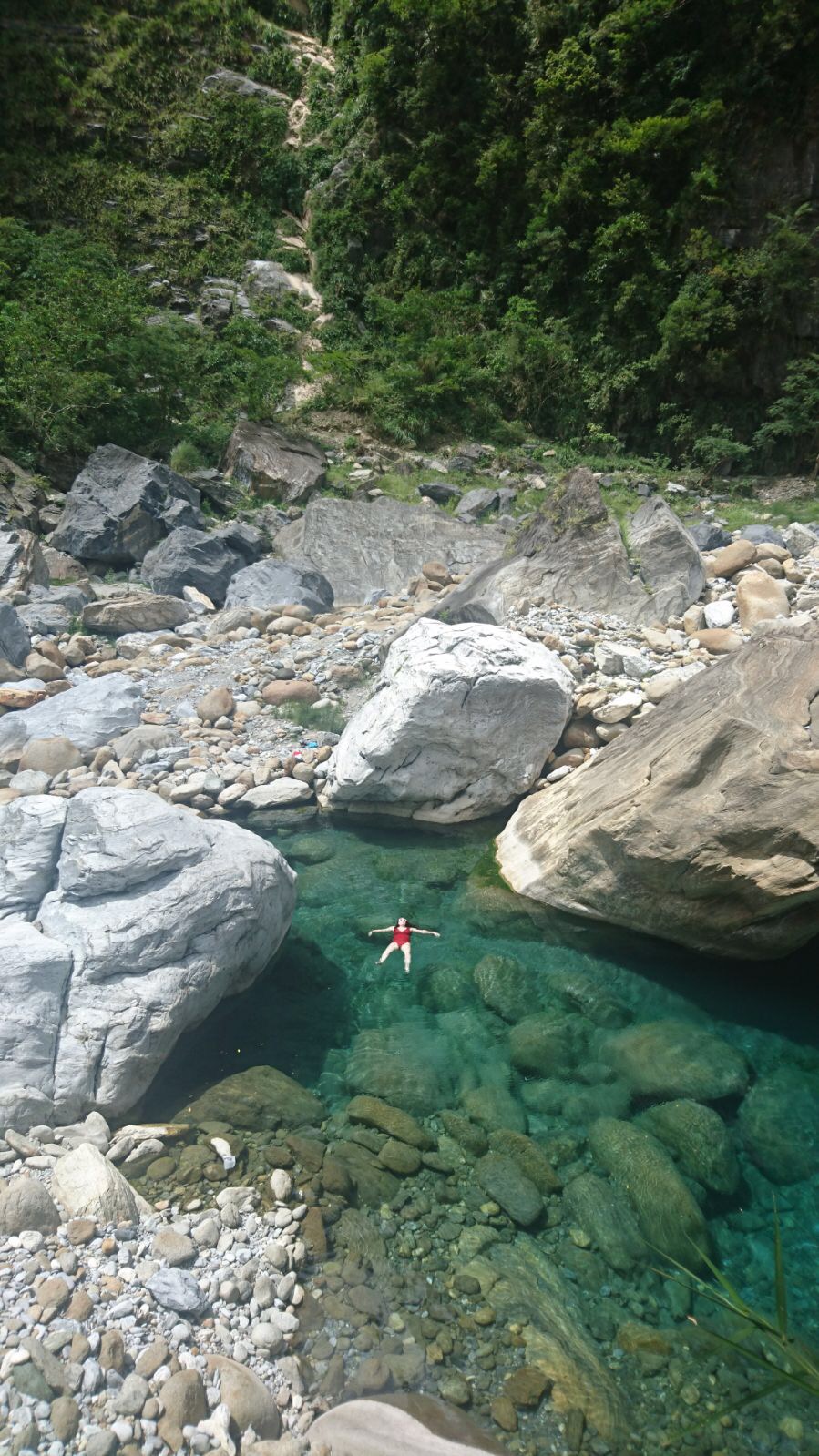
Hello again! Because my time in Taiwan is coming to an end, I decided to travel a bit around the rest of the island. My perception of Taiwan before arriving was based off of my travels in China, so I was expecting Taiwan to be like one large city. However, upon arriving I soon found that not to be the case. Taiwan has a lot if different types of scenery, from beaches to mountains to forrest and cities. Taiwan is extremely cheap to travel around with respect to public transportation. Last weekend I traveled to Hualien (花連) via the normal train, not the high speed rail, for around $12. When the train seats are all booked, you are given the option to book a ticket with no seat, meaning you stand in the aisle or sit in between cars. We ended up standing on the way there, but the ride was relatively short (around 2 hours) and the scenery was breathtaking. Hualien is located on the east coast of Taiwan and the train was moving right along the coastline giving us a beautiful view of the ocean. The main attraction to Hualien is Taroko National Park, a park owned by the Taiwanese Aboriginal people. A friend and I rented scooters and drove through and around the park stopping along the way to hike and swim. I can honestly say that I have never seen clearer water than in this park. One of the trails lead us to crystal clear pools where we were able to swim and cool off. The park also had many temples and bell towers hidden away in the mountains which people could hike to. The next day we rode down the coast stopping along various beaches to swim and enjoy the scenery. Hualien wasn't what I was expecting, but ended up being 100 times better than what I expected. I have to say it is one of the most beautiful places that I've been to. 
Swimming in Taroko
Qingshui cliffs (清水斷崖)
Beaches along the coast


This past weekend I traveled down to Kaohsiung (高雄市) a city located in the south of Taiwan, a 5 hour train ride from Taipei. Again, I was blown away by how beautiful the scenery was. On our first day we traveled to Fu Guang Shan (佛光山) which is a Buddhist monastery, and one of the 3 places in the world to house one of the Buddha's teeth. The place was stunning and surprisingly empty for a popular tourist destination. We also visited lotus pond, which has over 42 different temples surrounding it; being able to see the differences in the places where different religions worship was very interesting. The next day we took a bus to Kenting National Park (墾丁) about a 2 hour journey from Kaohsiung. We ended up renting a scooter and driving around the park which was stunning; the view of the ocean from the cliffs was amazing. Around these areas I definitely used my Chinese more than I did in Taipei. Here people don't know English as well so being able to communicate in Chinese was a very proud moment for me. I know all my hard work is getting put to use!

 Fu Guang Shan (佛光山)
Dragon and Tiger Pagoda on Lotus Pond
Kenting National Park

Tuesday, July 18, 2017

Virtual Student Foreign Service Opportunity at State Department

Do you enjoy creating visual content? Are you familiar with tracking social media statistics? The Department of State is looking for an intern to help create social media content and prepare analytics reports for the East Asian and Pacific Affairs Bureau’s Twitter and Facebook platforms.

Find the full project description here.

Apply here, using project code: STATE-USA-EAP-220.

2 Months in Taipei, Taiwan (Vlog)


A quick update about my time in Taiwan.

Thinking about fieldwork in Uttar Pradesh


This summer’s fieldwork is partly a time to gather information for a paper on India’s new corporate social responsibility rules. However, it is also an opportunity to experience what it takes to translate research plans into reality, to think carefully about how to adapt fieldwork strategies to different sorts of research objectives, and to experiment with approaches to staying healthy and productive in very different field environments.

Part of my work looks at the organizational effects of changes in funding for non-profits in India. Here, I have had reasonable success in speaking with NGO officials, retired bureaucrats, academics, and others who have direct experience in this area. Perhaps they have been involved in regulating the non-profit sector, raising or allocating funds, or managing relations between non-profits and funders. These conversations are fairly easy, since I am talking with people about their areas of professional expertise. However, a second part of my work considers how the size of the non-state service sector affects relations between citizens and politicians. This is in some ways a more abstract question, and it requires that I speak with people about issues that they may think about only occasionally, and that may in fact be quite far removed from their day-to-day concerns. Although one could simply ask a farmer or laborer whether a new initiative in their village has changed their relationship with the state and with politics, in the end this is likely not a fruitful approach. Rather, one might ask people more indirect questions about their relations with political actors, look for evidence of behavioral change that might have resulted from a changed context, and consider whether the introduction of a large NGO initiative has led people to talk about politicians and the state differently. This style of work is quite different and, in some ways more challenging for an outside researcher, than speaking with government and non-profit professionals.

I have experimented with both approaches this summer, and in urban as well as rural settings. One important outcome will be a more informed dissertation prospectus. Not only do I know much more about my area of substantive interest than when I arrived in India in early June, but I have a more grounded perspective about how to push the project forward. Given the understanding I hope to build and the information I hope to collect, with whom should I be spending my time, how should I structure my research plan, and what challenges will I face? On a personal level, how is the experience of elite interviews different from more immersive ethnographic work, and what does this imply for how I live day-to-day in the field?

Several weeks remain in my summer travels. I’ve taken this week “off” for writing and a bit of relaxation in the hills. I’ll jump back into fieldwork next week as I travel to India’s financial hub, Mumbai, to speak with people involved in shaping corporate approaches to CSR and to see what several such initiatives look like on the ground in an urban setting. 


Sam Frantz
 is a doctoral student in political science, and a recipient of a 2017 Sigur Center Grant for Asian Field Research.


Lucknow University


Metro construction in Lucknow


Hardoi district, Uttar Pradesh

Hardoi Station, Uttar Pradesh